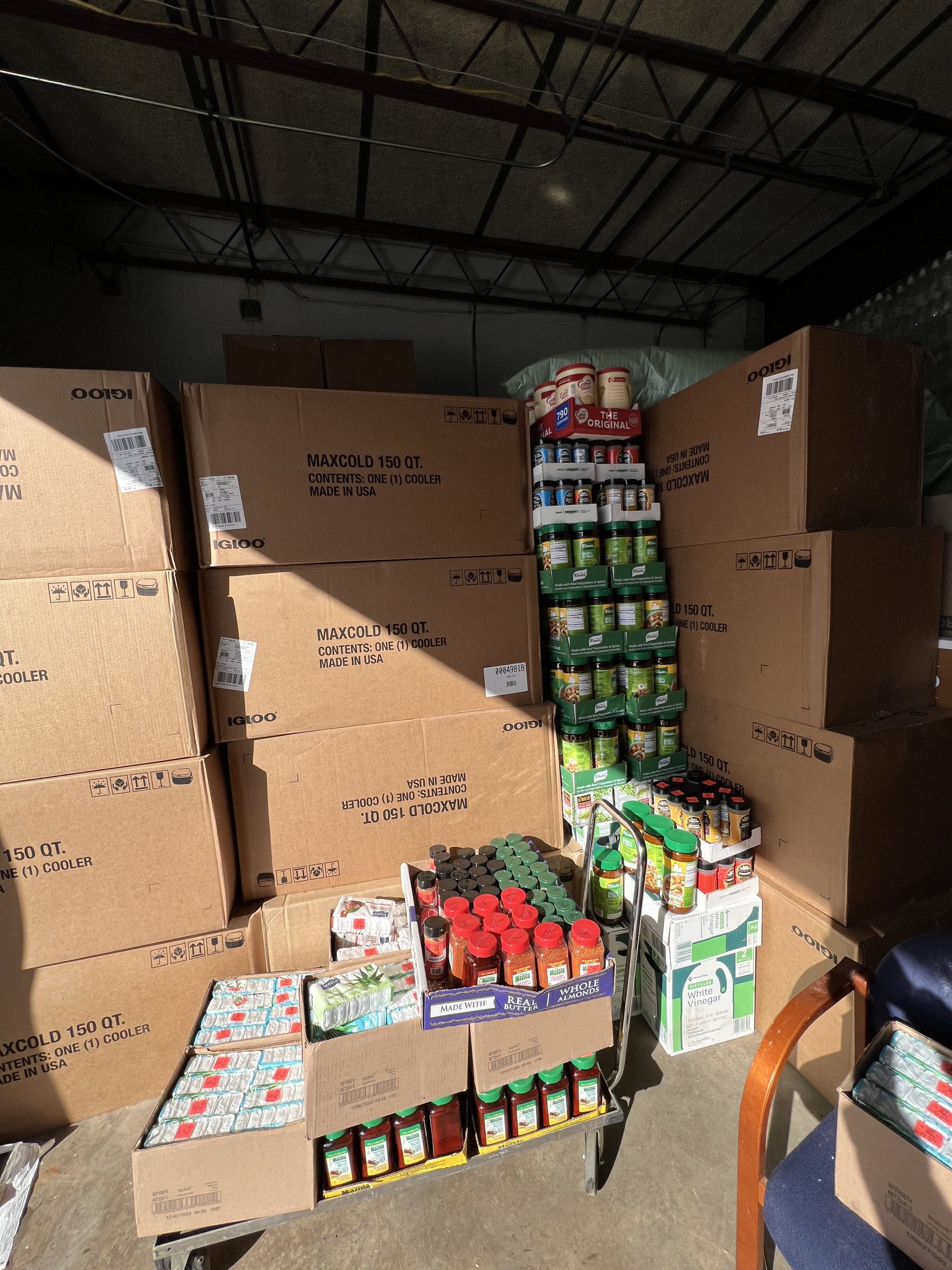
Food security is not abstract when you are packing rice into bags at 9 PM on a Tuesday in a Laurel, Maryland warehouse. It is measured in units: cans, bags, packets, buckets. And every unit has a name attached to it on the other end — a family, a child, a school.
This is the story of 648 units of food, from packing night to distribution day.
Part 1: Baltimore Packing Night
Inventory
The warehouse floor was covered in donated goods: bags of rice, canned vegetables, powdered milk, cooking oil, dried beans, and oral rehydration salts. Each category had a station. Each station had a volunteer.
The count before packing began: 648 individual food units, sourced from bulk purchases, community food drives, and corporate donations.
Volunteers
Fourteen volunteers showed up on a Tuesday evening. Some were regulars. Some were first-timers who saw a social media post and decided to help. A few brought their teenagers. Everyone got gloves, a station assignment, and a target count.
Quality Control
Every item was checked before it went into a bag. Expiration dates verified. Damaged packaging pulled. Dented cans set aside. The rule is simple: if you wouldn’t feed it to your own family, it doesn’t ship.
By 11 PM, the floor was clear. Every unit was sorted, bagged, labeled, and staged for loading.
Part 2: Funding the Hydration Gap
Food gets the most attention, but water is the silent gap. Families receiving food bags often lack access to clean drinking water. Children who eat well but drink contaminated water still get sick. The hydration gap undermines everything else.
Diaspora Remitters
MACONA’s donor base includes West African diaspora families in the Baltimore-Washington corridor who already send money home monthly. Many redirected a portion of their remittances to fund hydration supplies — water purification tablets, reusable bottles, and oral rehydration packets.
Corporate Donors
Corporate matching through Benevity covered the cost of two hydration hubs — portable water filtration stations that serve an entire school. At $100 per hub, the cost is modest. The impact is not.
Part 3: Arrival in Bamako
The shipment arrived in Bamako four weeks after packing night. The local MACONA team — three coordinators and a rotating group of community volunteers — handled distribution over two days.
What 648 units of food looks like on the ground:
- 210 family bags — rice, beans, cooking oil, powdered milk, and canned vegetables. Each bag feeds a family of four for approximately one week.
- 62 infant kits — powdered formula, oral rehydration salts, and nutrient supplements for children under two.
- 40 hygiene buckets — soap, toothbrushes, sanitary pads, and hand sanitizer. Hygiene and food go together.
- 2 hydration hubs — portable water filtration stations deployed at two partner schools. Each hub serves up to 200 students daily.
Aminata’s Story
Aminata is nine years old and attends one of MACONA’s partner schools in Bamako. Before the delivery, her family rationed meals to two per day. Her mother walked 40 minutes each way to the nearest market, buying what she could afford that week.
The family bag Aminata’s mother received contained enough food for a full week. The hydration hub at her school meant Aminata no longer had to bring water from home — she could drink clean, filtered water at school. Her attendance improved. Her teacher noticed she was more alert in the afternoon.
One bag. One hub. One child who shows up ready to learn.
How You Can Keep the Pipeline Moving
Give
- $25 — packs 5 family food bags
- $50 — funds 10 infant nutrition kits
- $100 — deploys one hydration hub at a school
- $250 — sponsors an entire distribution day
File a Match
If your employer offers matching gifts, search for MIMI AFRICAN CHARITIES (EIN 93-3813688) in Benevity. Corporate matches funded both hydration hubs in this shipment.
Host a Pantry Pop-Up
Organize a food collection at your workplace, church, or community center. We provide the list of needed items and the shipping logistics. You provide the community.